Flooring has a bigger influence on the character of a home than many people realise. It covers a large visual area, connects different rooms and provides the foundation for furniture, lighting and colour choices. The right floor can make even a relatively simple interior feel refined and carefully planned.
Creating a premium look does not necessarily mean choosing the most expensive material available. It is more about selecting flooring with the right texture, scale, finish and durability for the space. From warm timber to elegant stone and modern large-format tiles, thoughtful flooring choices can transform the overall atmosphere of a home.
Start With Timeless Natural Materials
Premium interiors often feel convincing because the materials have depth and character. Timber, stone and other natural materials can introduce warmth, texture and subtle variation that manufactured surfaces sometimes struggle to reproduce.
Natural wood is particularly effective in living rooms, dining spaces and bedrooms. Oak remains popular because it works with both contemporary and traditional interiors, while walnut can create a richer and darker appearance.
Stone works particularly well in entrances, kitchens and larger open-plan spaces. Rather than selecting materials simply because they are fashionable, consider how their colour and texture will work with the rest of the property.
Choose Wide Planks for a More Spacious Appearance
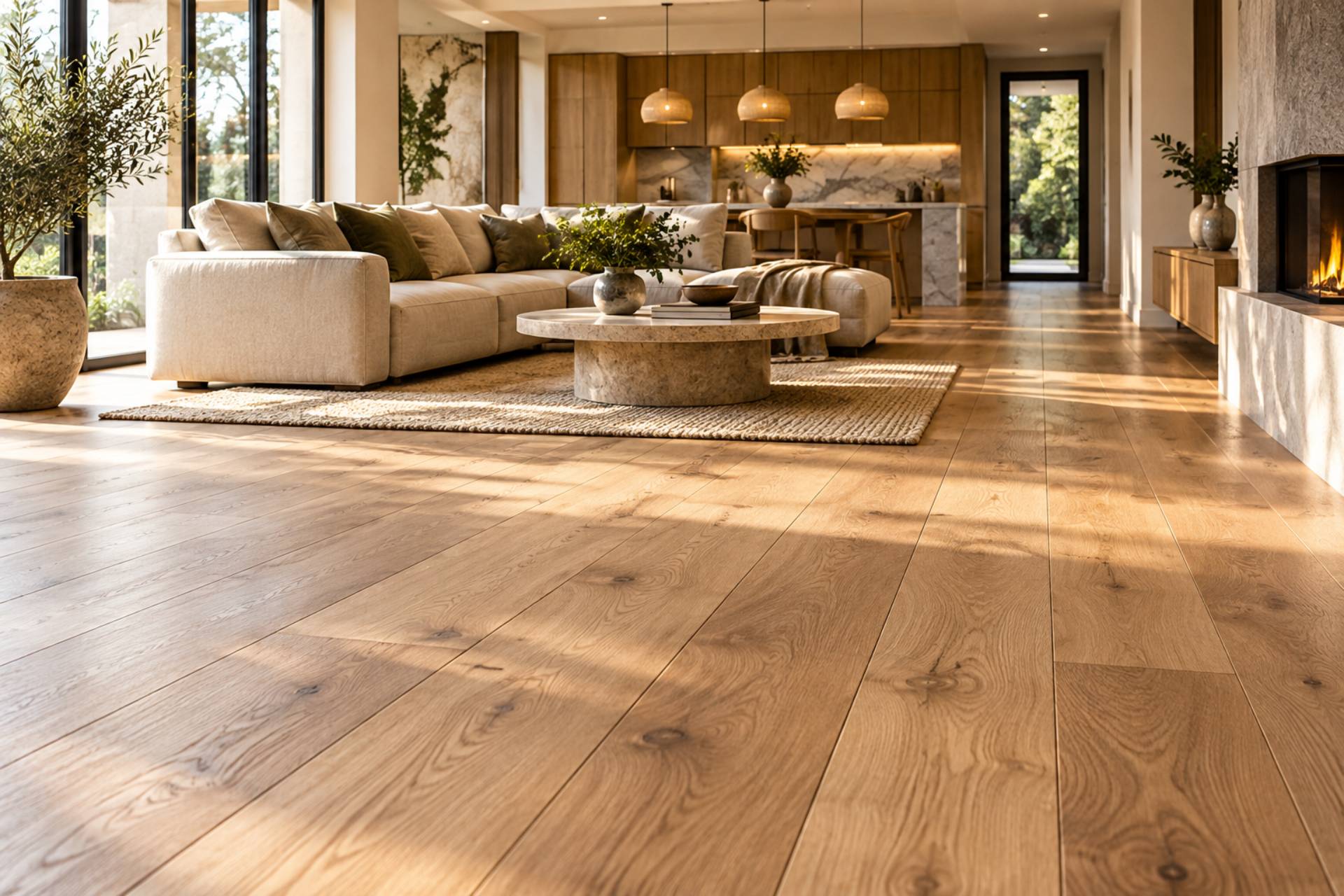
Wide flooring planks can immediately make an interior feel calmer and less visually busy. With fewer joint lines across the floor, attention moves towards the natural grain and length of the boards.
This approach can work particularly well in open-plan living spaces. Long planks running in the same direction through connected rooms can also improve visual continuity.
For a sophisticated appearance, avoid combining too many different flooring styles within adjoining areas. Consistency often looks more intentional than changing materials every time you enter another room.
Consider Herringbone and Chevron Patterns
Patterned wood flooring can give an interior a more distinctive architectural quality. Herringbone is a classic option in which rectangular pieces meet at staggered right angles, while chevron flooring uses angled ends to produce continuous V-shaped lines.
Both can work beautifully in hallways, dining rooms and formal living areas.
Patterned flooring already creates plenty of visual interest, so surrounding finishes can remain restrained. Neutral walls, simple furniture and carefully selected lighting allow the floor to become part of the design without making the room feel overloaded.
Invest in Quality Rather Than Surface Appearance Alone
A floor should still look good after years of daily use. That makes construction, finish and suitability just as important as colour.
Choosing quality flooring can help create a stronger design foundation while also reducing the risk of an attractive surface quickly becoming scratched, damaged or difficult to maintain.
Think about how the room is actually used. A peaceful bedroom has very different requirements from a busy kitchen, hallway or family living space.
For high-traffic areas, durability and maintenance should carry considerable weight in the final decision. Premium design works best when appearance and practicality support one another.
Use Real Stone for Understated Luxury
Few materials create the same sense of permanence as stone. Marble, limestone, travertine and slate all offer distinctive textures and natural variation.
Using real stone can be particularly effective when the aim is to create interiors that feel tactile and authentic rather than overly decorated.
Large stone tiles can suit kitchens, entrance halls and bathrooms. Honed finishes are often easier to integrate into relaxed contemporary homes than extremely glossy surfaces because they produce a softer appearance.
Stone should always be selected for the specific environment. Some varieties require sealing and additional maintenance, so appearance should not be the only consideration.
Explore Large-Format Tiles
Large-format porcelain tiles can create a clean, high-end appearance while offering practical advantages in busy parts of the home.
Because larger tiles require fewer grout lines, floors can appear smoother and more continuous. This is especially useful in kitchens, bathrooms and open-plan areas where homeowners want a minimalist finish.
Modern porcelain can imitate marble, limestone, concrete and other materials convincingly. This makes it possible to create a luxurious visual effect while benefiting from easier maintenance.
Pay attention to grout colour as well. Selecting a shade close to the tile colour creates a quieter finish, while contrasting grout makes the pattern more noticeable.
Keep Flooring Consistent Between Connected Rooms
One of the simplest ways to make a home feel more considered is to reduce unnecessary flooring changes.
Using the same flooring through a hallway, living room and dining area can visually connect the spaces. The eye travels uninterrupted across the floor, which can also help smaller homes feel more open.
Different flooring may still be appropriate in bathrooms, utility rooms and other moisture-prone areas. However, colours and undertones should complement one another.
For example, warm oak beside a warm-toned stone usually feels more coordinated than combining several unrelated grey, yellow and red undertones.
Select Colours That Work With Natural Light
Flooring colour can dramatically alter the mood of a room.
Light oak, pale stone and soft neutral flooring can help brighten spaces with limited daylight. Medium wood tones add warmth without dominating a room, while darker floors can introduce drama and contrast in larger, well-lit spaces.
Always examine flooring samples in the actual room before making a final decision. Artificial showroom lighting can make colours appear different from how they look at home.
View samples during the morning, afternoon and evening where possible. Also compare them with existing walls, cabinetry and large furniture pieces.
Add Comfort With Rugs
A premium floor does not need to remain completely uncovered. Rugs can soften hard surfaces, improve acoustic comfort and help define individual zones.
In a large living room, a generously sized rug can visually connect the sofa and chairs. In a bedroom, placing a rug beneath the bed introduces softness while allowing part of the flooring to remain visible.
Scale matters. A rug that is too small can make furniture appear disconnected, while a properly proportioned rug makes the arrangement feel deliberate.
Choose colours and textures that complement the flooring rather than competing with it.
Think About Underfloor Heating Early
Comfort contributes greatly to how luxurious a home feels. Underfloor heating can remove the need for visible radiators in certain spaces and create an even feeling of warmth underfoot.
However, not every floor covering reacts to heat in the same way. Stone and porcelain are commonly paired with underfloor heating because they conduct heat efficiently. Some engineered timber products may also be suitable when installed according to the manufacturer’s instructions.
If underfloor heating is planned, make the decision before purchasing flooring. The heating system, subfloor preparation, adhesive and floor covering need to work together correctly.
Pay Attention to Finishing Details
Small installation details often distinguish an ordinary floor from a polished one.
Transitions between rooms should look neat. Skirting, thresholds and floor trims should complement the surrounding design rather than appearing as afterthoughts.
Plank direction also deserves attention. Running boards towards a major window, along the longest dimension of the room or consistently through connected spaces can influence how large and balanced the interior appears.
Professional preparation of the subfloor is equally important. Even premium materials can look disappointing if the surface underneath is uneven.
Balance Luxury With Everyday Practicality
Premium flooring should suit real life.
Homes with pets, children or frequent visitors may benefit from materials that tolerate scratches, spills and heavy foot traffic. A delicate finish that requires constant protection may eventually reduce enjoyment of the room.
Engineered wood, high-quality porcelain and modern luxury vinyl can all provide different balances between appearance and practicality.
Consider cleaning requirements, water resistance, refinishing options and expected lifespan alongside aesthetics. The best flooring is not simply the material that looks impressive on installation day, but one that continues to suit the household over time.
Frequently Asked Questions
What flooring makes a home look more expensive?
Wide-plank timber, herringbone flooring, natural stone and well-chosen large-format porcelain can all create a premium appearance. Consistent installation, appropriate proportions and good finishing details often matter just as much as the material itself.
Is light or dark flooring more luxurious?
Both can look luxurious. Light floors tend to create a bright, spacious and relaxed appearance, while darker floors can feel richer and more dramatic. The best choice depends on room size, natural light, furniture and the wider colour scheme.
Is engineered wood suitable for a premium interior?
Yes. High-quality engineered wood can provide the natural appearance of timber while offering greater dimensional stability than some solid wood floors. Look closely at the wear layer, construction, finish and installation requirements before choosing a product.
Should flooring be the same throughout the house?
It does not need to be identical everywhere, but maintaining some continuity between connected rooms can make a home feel more cohesive. When different materials are required, coordinating their colours and undertones helps create a smoother transition.
Conclusion
Creating a premium home feel starts with treating flooring as a major design decision rather than simply a practical surface. Timber, stone, patterned designs and large-format tiles can all look sophisticated when they suit the architecture and everyday demands of the property.
Focus on material quality, proportion, colour consistency and careful installation. Consider maintenance and durability alongside appearance, and use flooring to connect rather than divide adjoining spaces. A thoughtfully chosen floor provides a strong foundation for the rest of the interior and can continue to enhance the home long after shorter-lived decorating trends have changed.