A beautiful home is not simply a collection of attractive rooms. It is a space that feels comfortable, connected, and easy to live in.
That feeling comes from space harmony. It is the balance between furniture, colour, light, texture, movement, and organisation that makes a home feel naturally cohesive. When a room is harmonious, nothing feels unnecessarily crowded or visually disconnected. Each element has a purpose, and the spaces work together rather than competing for attention.
The good news is that creating harmony does not require a large house, expensive furniture, or a particular decorating style. It starts with understanding how people move through a space and how different design choices affect the way a room feels.
What Is Space Harmony?
Space harmony is the thoughtful arrangement of interior elements so they work together visually and functionally.
It includes:
- Furniture placement
- Room proportions
- Colour combinations
- Lighting
- Texture and materials
- Storage and organisation
- Visual connection between rooms
- Clear pathways
- Decorative balance
A harmonious interior feels intentional without looking overly designed. You can notice the beauty of the room, but you can also relax in it.
This is why harmony is different from simply making a home look stylish. A room may contain fashionable furniture and beautiful accessories yet still feel uncomfortable if the layout is awkward or the visual elements compete with one another.
Start With the Flow of the Room
Good interior design begins with movement.
Before choosing furniture or décor, consider how people naturally enter, leave, sit, work, and interact within the room. A layout should support those activities rather than interrupt them.
For example, a living room should allow people to move easily between the entrance, seating area, windows, and other parts of the home. A dining area should provide enough room to pull out chairs comfortably. A bedroom should have practical access around the bed and storage areas.
Look for natural pathways
Walk through each room and identify the routes people use most often. Then check whether furniture, rugs, tables, or decorative pieces create unnecessary obstacles.
A simple rule is useful: keep important pathways clear and make frequently used areas easy to reach.
This creates physical flow, but it also improves visual flow. When the eye can move naturally around a room, the space often feels larger and calmer.
Choose Furniture Based on Proportion
Furniture should relate to the size of the room.
An oversized sofa can dominate a small living room, while tiny furniture may look lost in a large open space. Neither situation creates balance.
Think about proportion rather than simply asking whether a particular piece looks attractive.
Consider:
- The height of furniture compared with the ceiling
- The size of furniture compared with the room
- The relationship between large and small pieces
- The amount of open floor space
- The scale of accessories and artwork
A balanced room usually combines different sizes without allowing one element to overwhelm everything else.
For instance, a large sofa can be balanced with a substantial coffee table, floor lamp, artwork, or rug. In a smaller room, lighter furniture with visible floor space can create a more open feeling.
Create Visual Balance
Balance does not mean placing identical objects on opposite sides of a room.
There are several ways to create it. Symmetrical arrangements use matching or similar elements, while asymmetrical arrangements balance different objects through their visual weight.
Imagine a sofa with a large floor lamp on one side. The other side does not necessarily need another identical lamp. A substantial plant, side table, or artwork may provide enough visual weight.
The goal is to prevent one area from feeling noticeably heavier than another.
Use a focal point
Most rooms benefit from one clear focal point.
It might be:
- A fireplace
- A large window
- A statement light
- A piece of artwork
- A textured wall
- A beautifully designed bed
Once the focal point is established, arrange supporting elements around it. This creates hierarchy and prevents every object from demanding attention at the same time.
Build a Consistent Colour Story
Colour strongly influences the atmosphere of a home.
You do not need to use the same colour everywhere. Instead, create a connected palette that allows rooms to transition naturally.
A useful approach is to choose:
- A foundation colour for larger surfaces such as walls or major furniture.
- Supporting colours for upholstery, curtains, rugs, and accessories.
- Accent colours for smaller decorative details.
Neutral colours can provide a calm foundation, while muted greens, blues, warm earth tones, soft creams, or gentle terracotta shades can add character without overwhelming a room.
Colour psychology can also help. Cooler tones often create a quieter atmosphere, while warmer colours can make spaces feel more intimate and energetic. However, lighting, room size, materials, and personal preference all influence how a colour actually appears.
The best palette is one that feels comfortable to you and works naturally with the home’s architecture.
Let One Room Lead Into Another
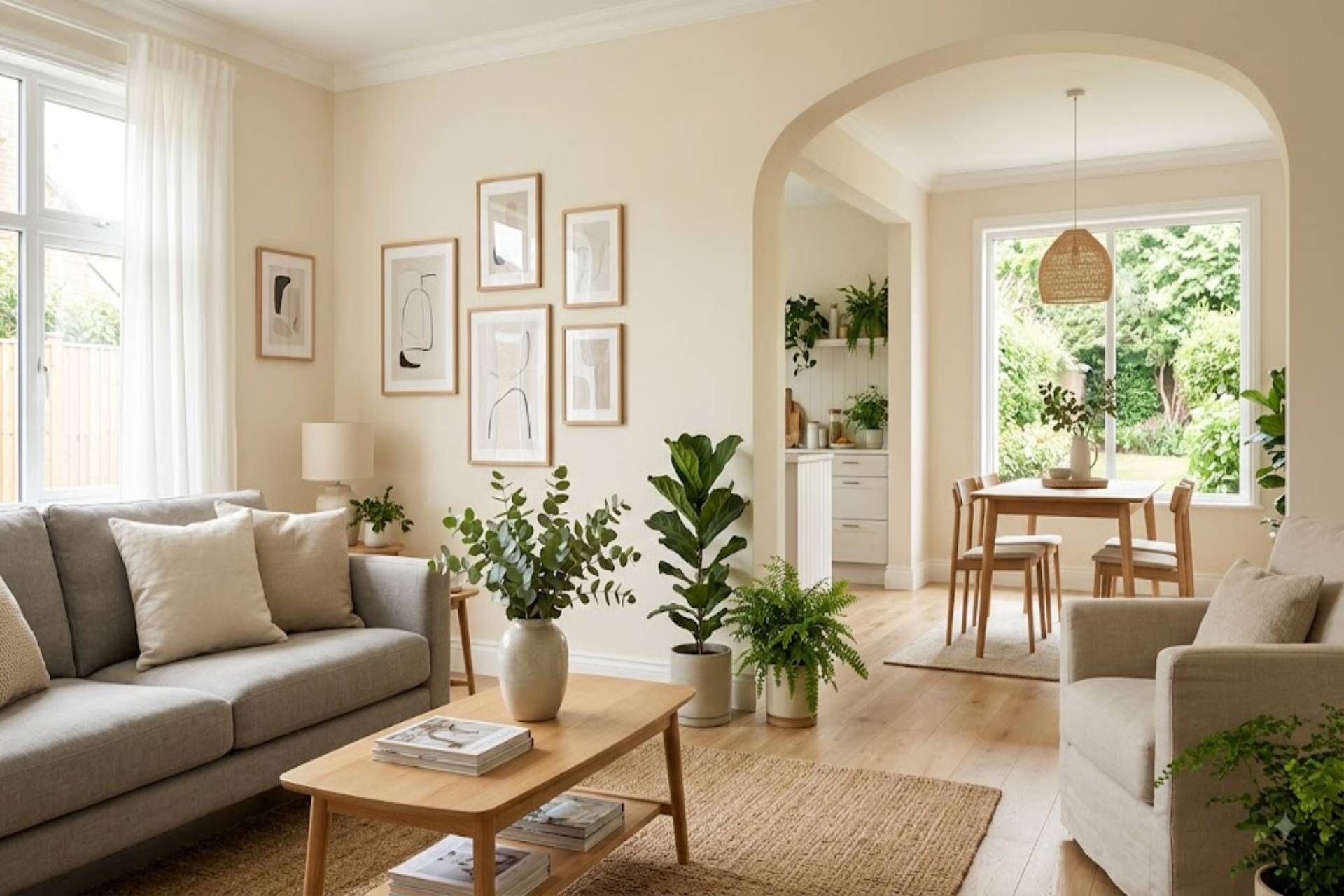
Harmony becomes especially important in open-plan homes and connected spaces.
When every room uses completely different colours, materials, and design styles, the home can feel fragmented. A better approach is to repeat selected elements throughout the interior.
For example, you might repeat:
- A wood finish
- One or two accent colours
- Similar metal finishes
- Related fabrics
- Consistent flooring
- Similar lighting shapes
These repeated details create a subtle design language.
The rooms do not have to match. They simply need to feel as though they belong to the same home.
Use Texture to Add Depth
A room can have a simple colour palette and still feel rich when different textures are introduced.
Combine smooth, soft, rough, natural, and reflective surfaces where appropriate.
Think about the contrast between:
- Linen and wood
- Wool and stone
- Cotton and metal
- Glass and natural fibres
- Smooth furniture and textured rugs
Texture is particularly useful in minimalist interiors because it adds visual interest without requiring lots of decoration.
A neutral room with layered textures can feel warm and sophisticated without becoming busy.
Make Lighting Part of the Design
Lighting can completely change how a room feels.
A harmonious lighting plan usually includes more than one source. Instead of depending entirely on a central ceiling light, combine different types of illumination.
Consider three layers
Ambient lighting provides general illumination.
Task lighting supports specific activities such as reading, cooking, working, or dressing.
Accent lighting highlights artwork, architectural details, plants, or decorative features.
Natural light should also be considered. Keep windows as open as practical and use window treatments that allow you to control brightness and privacy.
Warm, comfortable lighting can make an evening space feel relaxed, while brighter task lighting can improve visibility in work areas.
Declutter With Intention
A peaceful room is not necessarily an empty room. It is a room where everything has a clear place.
Clutter creates visual noise because the brain has to process too many competing objects. Intentional organisation reduces that noise while keeping everyday essentials accessible.
Instead of asking, “How can I hide everything?” ask:
“What genuinely needs to live in this room?”
Keep frequently used items convenient and store less-used belongings out of sight.
Practical storage can include:
- Built-in cabinets
- Storage benches
- Baskets
- Shelving
- Bedside drawers
- Modular kitchen storage
- Multi-purpose furniture
Good organisation is not about owning as little as possible. It is about making the things you own easier to manage.
Use Classic Design Principles
Many timeless interior design ideas have remained useful because they are based on human comfort and visual balance rather than fashion.
Proportion
Objects should relate naturally to the room and to one another.
Repetition
Repeating colours, shapes, materials, or finishes creates consistency.
Rhythm
The eye should move naturally through a room rather than stopping abruptly at unrelated elements.
Contrast
Differences in colour, texture, shape, or scale create interest and prevent a space from becoming flat.
Hierarchy
Some elements should be more visually important than others. This gives the room a clear focal point.
These principles work across traditional, contemporary, minimalist, Scandinavian, modern, and eclectic interiors.
Create Harmony in Small Spaces
Small homes can feel harmonious when every design decision supports openness and functionality.
Avoid filling every available corner. Open floor space can be just as valuable as furniture.
Choose pieces that serve more than one purpose when possible. A storage ottoman, extendable dining table, wall-mounted desk, or bed with integrated storage can improve functionality without adding visual clutter.
Mirrors can also increase the sense of openness by reflecting light and extending visual depth.
Most importantly, avoid assuming that a small room needs only small objects. One well-proportioned statement piece can often look better than many small decorative items.
Make the Bedroom Feel Restful
The bedroom should support rest, so visual calm matters more here than in many other rooms.
Choose a restrained colour palette and avoid unnecessary clutter around the bed. Soft textiles, layered bedding, comfortable lighting, and simple bedside storage can create a peaceful atmosphere.
Keep technology and work-related objects organised where possible. The goal is to make the bedroom feel separate from the demands of the day.
Create Connection in the Living Room
The living room often brings people together, so furniture should encourage conversation.
Rather than automatically placing every piece against a wall, consider creating a central seating arrangement. Sofas and chairs can face one another or be arranged around a shared focal point.
A rug can help visually define the seating area, particularly in an open-plan home.
Leave enough space for people to move comfortably while keeping seats close enough to encourage interaction.
A harmonious living room should feel welcoming rather than perfectly staged.
Design a Kitchen for Everyday Life
A well-designed kitchen combines visual order with practical movement.
Keep frequently used cooking, preparation, and cleaning areas logically connected. Storage should make everyday tasks easier rather than forcing you to constantly move around the room.
A modular kitchen can be particularly effective when storage is planned around actual habits.
Keep countertops as clear as possible, but do not remove everything. A few useful items, such as a cutting board, fruit bowl, or frequently used appliance, can make the space feel lived-in and functional.
Bring Nature Into the Home
Natural elements can add warmth and softness to interiors.
Plants, wood, stone, woven materials, natural fibres, and daylight can make a room feel more connected to the outdoors.
You do not need a large collection of plants. One carefully positioned plant may have more impact than several crowded together.
Natural materials also tend to age gracefully, which makes them valuable choices for timeless interior design.
Design for How You Actually Live
One of the most important principles of harmonious interiors is simple: design for real life.
A home should support the people who use it.
If your family gathers around the television, make that area comfortable. If you work from home, create a dedicated workspace. If children regularly play in the living room, allow storage and floor space for their activities.
Beautiful design becomes much more valuable when it improves daily routines.
Practical luxury is often found in small details: comfortable seating, easy-to-reach storage, good lighting, durable materials, and layouts that remove everyday frustrations.
A Simple Room Harmony Checklist
Before considering a room finished, ask yourself:
- Can people move through the room easily?
- Is the furniture appropriately scaled?
- Does the room have a clear focal point?
- Are colours connected without becoming repetitive?
- Are textures layered thoughtfully?
- Is lighting suitable for different activities?
- Does every important item have a place?
- Is there enough open space?
- Does the room connect naturally with nearby spaces?
- Does the design support the way the room is actually used?
If the answer is yes to most of these questions, the room is likely to feel balanced and functional.
Why Harmonious Interiors Matter
Space harmony is not only about appearance.
A well-organised home can reduce everyday friction. Clear pathways make movement easier. Practical storage reduces searching and tidying. Comfortable furniture supports relaxation and social connection. Suitable lighting can make work and leisure areas more effective.
The emotional impact matters too.
When your surroundings feel orderly and intentional, it can become easier to relax and focus. A calm home does not solve every source of stress, but it can remove unnecessary visual and practical distractions from daily life.
That makes interior design a tool for better living rather than decoration for decoration’s sake.
Popular Questions
1. What is space harmony in interior design?
Space harmony is the balanced arrangement of furniture, colours, lighting, textures, and décor so a room feels cohesive, comfortable, functional, and visually peaceful.
2. How can I make my home feel more harmonious?
Improve room flow, reduce clutter, coordinate colours, balance furniture proportions, layer lighting, and repeat selected materials or design details throughout connected spaces.
3. What colours create a peaceful home?
Soft neutrals, muted blues, gentle greens, warm creams, and earthy tones often create calm interiors. The best choice depends on natural light, room size, furnishings, and personal preference.
4. How do I create harmony in a small room?
Choose appropriately scaled furniture, maintain clear pathways, use multifunctional storage, limit visual clutter, and preserve some open floor space to make the room feel balanced.
5. Why is furniture arrangement important?
Furniture arrangement affects movement, conversation, comfort, and visual balance. A thoughtful layout helps a room function efficiently while creating a more welcoming and cohesive atmosphere.
Closing Remarks
Creating space harmony does not require following every interior trend or buying expensive furniture. It comes from making thoughtful decisions about flow, proportion, colour, lighting, texture, storage, and personal needs.
Start with the basics. Clear unnecessary obstacles. Choose furniture that fits. Build a connected colour palette. Repeat a few materials or details between rooms. Layer lighting and texture. Give everyday belongings practical homes.
Most importantly, design around the way you actually live.
When function and beauty support each other, a home begins to feel effortless. Every room can have its own personality while still belonging to the same story. That is the lasting value of space harmony: a home that looks balanced, feels peaceful, and works naturally for the people who live in it.